Space is often portrayed in movies as a place filled with dramatic explosions, roaring engines, and echoing blasts. In reality, space is completely silent. No matter how violent or powerful an event may be, sound cannot travel through the vacuum of space. This silence is not mysterious or unusual when viewed through the lens of physics. It is a direct result of how sound works and the unique conditions that exist beyond Earth’s atmosphere.
Understanding why space is silent helps explain the fundamental differences between Earth and the vast regions beyond it. It also reveals how deeply our everyday experiences of sound depend on air and other materials that are absent in space.
What Sound Really Is
Sound is not a substance or an energy wave that moves freely on its own. Sound is a vibration that travels through matter. When something makes a sound, it causes nearby particles to vibrate. These vibrations move from particle to particle, creating pressure waves that travel through a medium such as air, water, or solid objects.
On Earth, sound usually travels through air. When you speak, your vocal cords vibrate, pushing air molecules together and pulling them apart. These vibrations move through the air until they reach someone’s ears, where they are interpreted as sound.
Without particles to vibrate, sound has nothing to travel through. This simple fact explains why sound behaves so differently in space compared to Earth.
The Role of a Medium in Sound Transmission
For sound to exist, a medium is required. A medium is any material substance that allows vibrations to pass from one place to another. Common sound-carrying media include air, water, metal, and even rock.
Sound travels at different speeds depending on the medium. In air, sound moves at about 343 meters per second. In water, it travels much faster, and in solids like steel, it can move several times faster still. The key requirement in all cases is the presence of particles that can collide and transfer vibrational energy.
Space, however, does not provide this environment. The near-total absence of particles means there is no medium to support sound waves.
Why Space Is a Vacuum
Space is often described as a vacuum, but it is not completely empty. There are small numbers of atoms, molecules, and charged particles scattered throughout space. However, these particles are so sparse that they are effectively isolated from one another.
In Earth’s atmosphere, billions of air molecules occupy every cubic centimeter. In space, there may be only a few particles in the same volume. The distances between particles are so large that vibrations cannot be passed along efficiently.
Because of this extreme emptiness, sound waves cannot form or propagate in space, making it completely silent to human ears.
Explosions in Space and the Absence of Sound
Explosions are often imagined as loud events, but their sound depends entirely on the surrounding medium. On Earth, an explosion compresses air rapidly, creating powerful sound waves that travel outward.
In space, an explosion would still release energy in the form of light, heat, and fast-moving debris, but there would be no air to carry sound. The explosion would appear visually dramatic, but it would be completely silent.
This is why spacecraft collisions, asteroid impacts, and even massive stellar explosions do not produce sound that can travel through space.
Why Astronauts Cannot Hear Each Other Outside
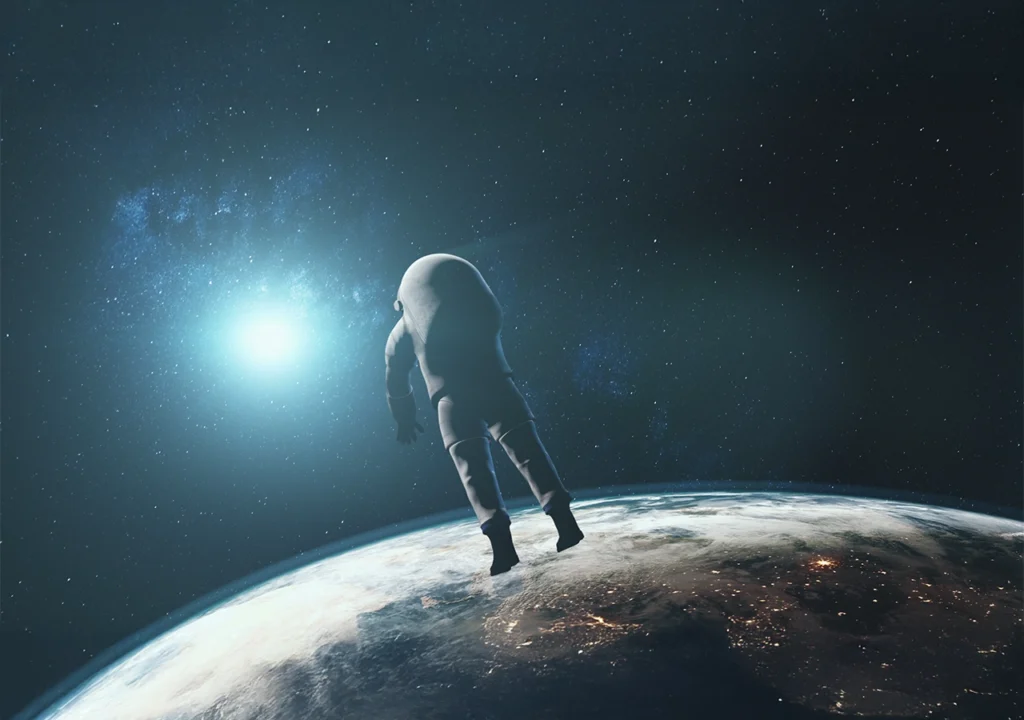
Astronauts working outside a spacecraft cannot hear one another directly, even if they are very close. This is because there is no air between them to transmit sound waves.
Instead, astronauts rely on radios built into their helmets. When an astronaut speaks, the microphone converts sound vibrations into electrical signals. These signals are then transmitted as radio waves, which can travel through the vacuum of space. The receiving astronaut’s radio converts the signals back into sound.
Without this technology, communication in space would be impossible using sound alone.
Sound Inside Spacecraft
Inside a spacecraft, sound behaves much like it does on Earth. Spacecraft are filled with air so astronauts can breathe, and this air provides a medium for sound to travel.
Fans, machinery, footsteps, and voices can all be heard normally inside pressurized environments. This contrast highlights that silence in space is not due to distance or isolation, but simply the absence of a suitable medium.
As long as air or another material is present, sound can exist, even far from Earth.
Can Any Kind of Sound Exist in Space?
While traditional sound cannot travel through space, vibrations and waves of other types can. Electromagnetic waves, such as light, radio waves, X-rays, and gamma rays, do not require a medium. They can move freely through the vacuum of space.
Scientists sometimes convert these electromagnetic signals into sound for study. For example, data from space telescopes may be translated into audible frequencies so researchers can analyze patterns more easily. However, these are not actual sounds traveling through space, but representations created for human interpretation.
In rare cases, extremely thin gas clouds can carry very faint vibrations, but these are far outside the range of human hearing and cannot be experienced directly.
Why Movies Get Space Sound Wrong
Movies and television often include sound in space scenes for dramatic effect. Explosions boom, engines roar, and laser blasts scream across the screen. While these sounds make scenes more exciting, they are scientifically inaccurate.
Filmmakers include sound because silence can feel unnatural or uncomfortable to audiences. Sound effects help convey motion, danger, and impact in ways that visuals alone sometimes cannot.
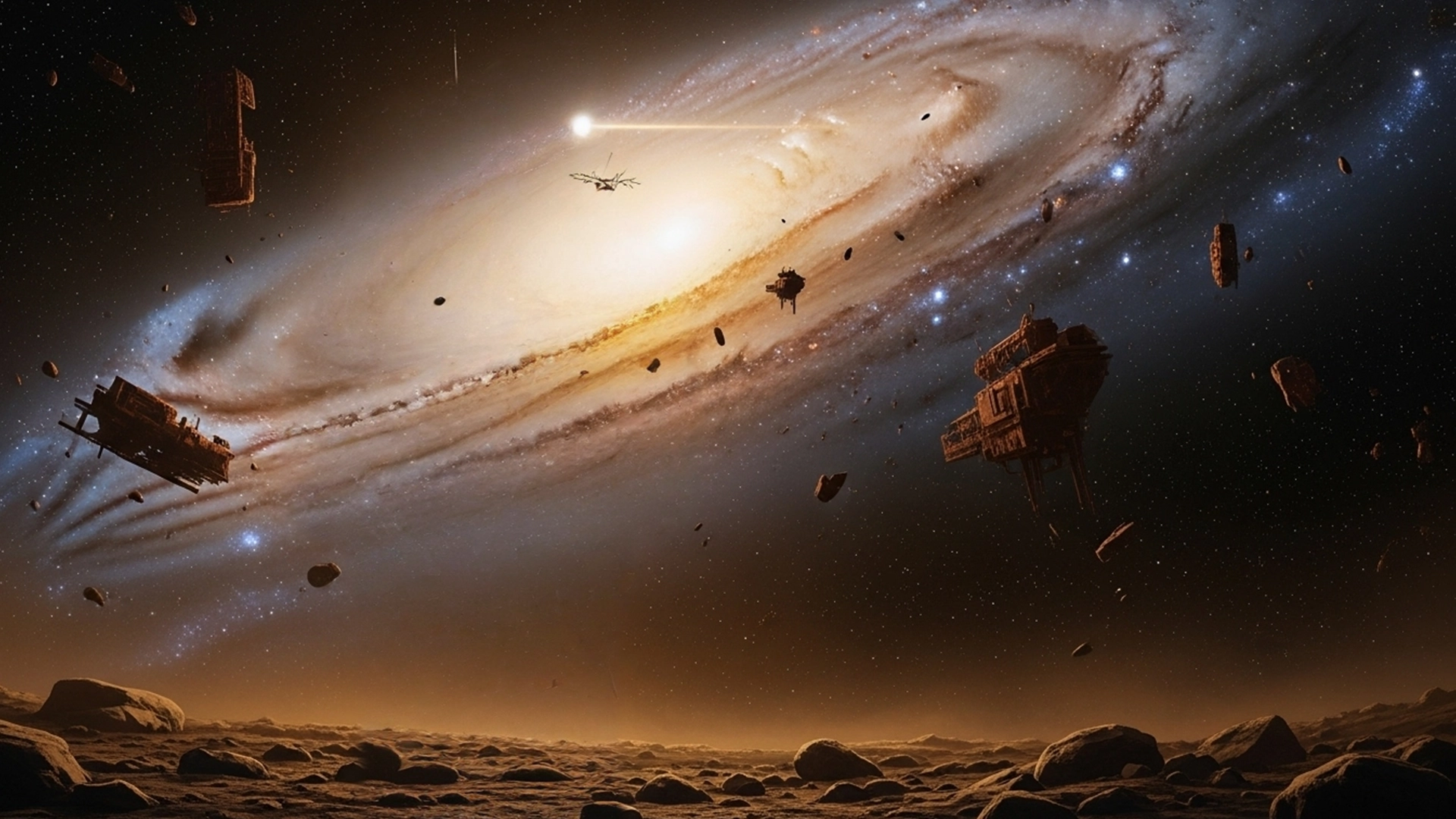
In reality, a space battle would be eerily quiet, with only flashes of light and drifting debris visible against the darkness.
The Silence of Space and Human Perception
Humans rely heavily on sound to understand their environment. Silence can feel unsettling because it removes an important source of information. In space, this silence would be absolute and unbroken.
Astronauts describe spacewalks as visually stunning but emotionally intense. While they can hear their own breathing and radio communications, the surrounding universe offers no natural sound at all.
This silence emphasizes how different space is from Earth and how much our senses are adapted to life within an atmosphere.
Sound and the Sun
Even powerful objects like the Sun do not produce sound that can travel through space. The Sun generates immense energy, including shock waves and vibrations within its plasma. However, these vibrations remain trapped inside the Sun or nearby solar material.
Once beyond the Sun’s atmosphere, there is no medium to carry sound. What reaches Earth from the Sun is light and other electromagnetic radiation, not sound waves.
Despite its immense activity, the Sun exists in complete silence from a sound perspective.
Cosmic Events and Silent Violence
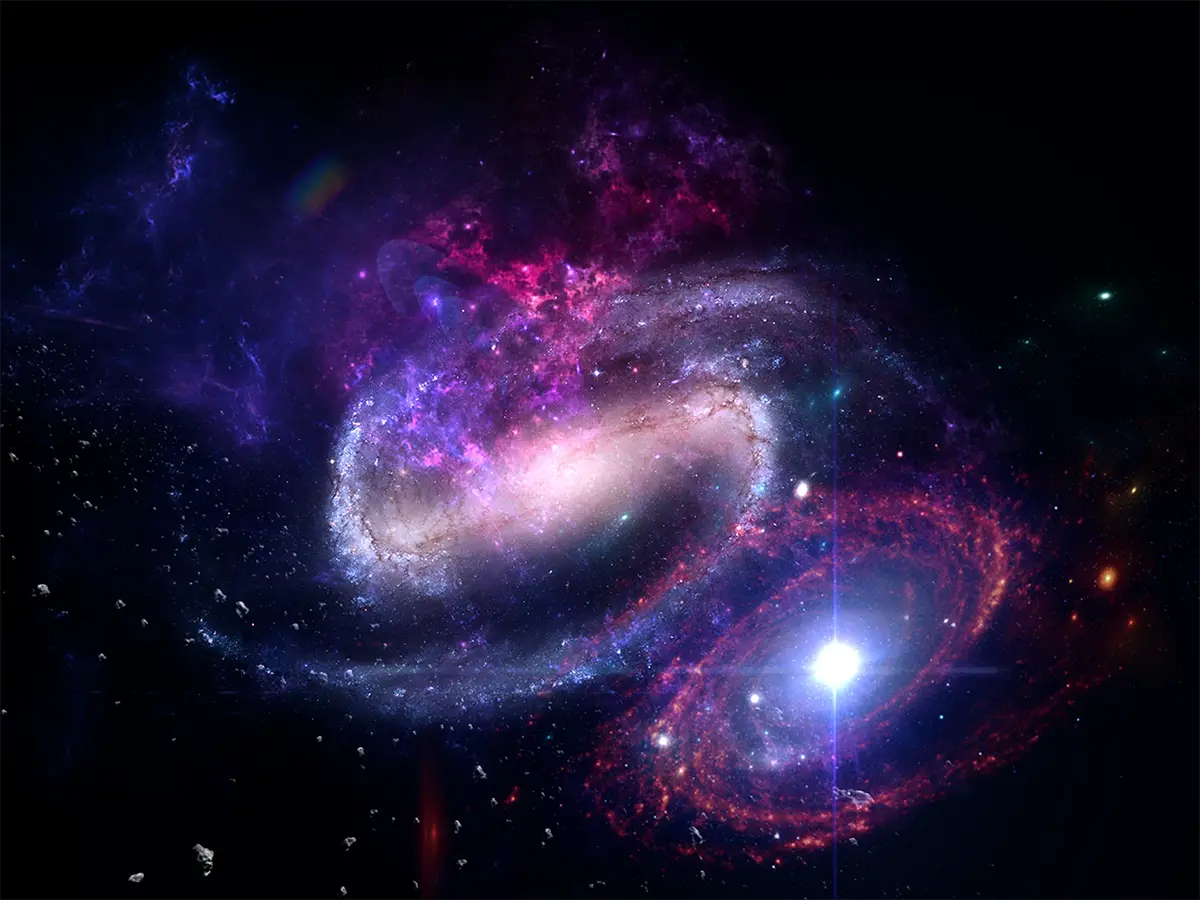
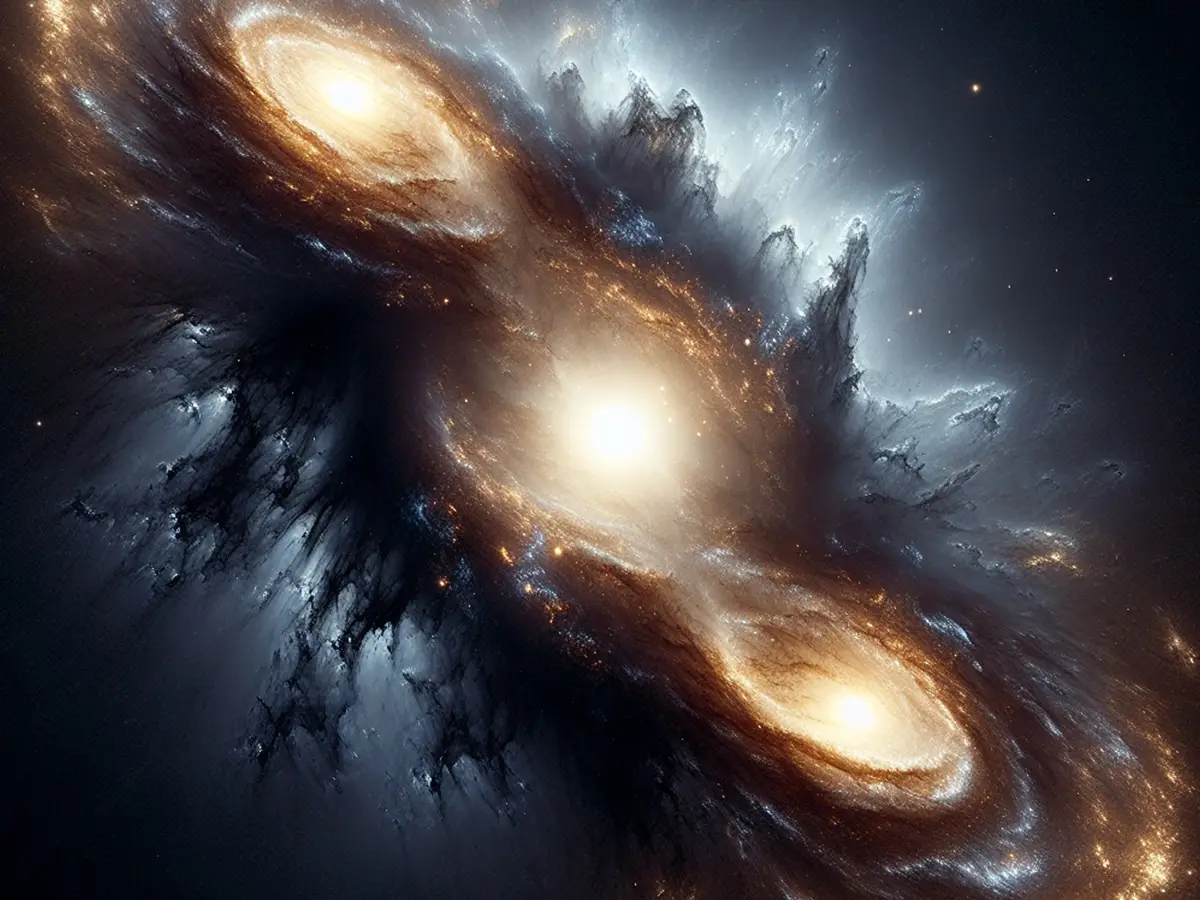
Some of the most violent events in the universe occur in silence. Supernovae release enormous amounts of energy. Colliding black holes distort spacetime itself. Gamma-ray bursts unleash intense radiation across vast distances.
All of these events would be silent to any observer in space. Their effects are seen, measured, and detected through light, radiation, and gravitational waves, not sound.
This highlights the difference between how humans imagine cosmic events and how they actually unfold.
Why Earth Is Full of Sound
Earth’s atmosphere is what makes sound possible. Air provides a dense, continuous medium that allows vibrations to travel efficiently. Oceans, land, and structures further amplify and reflect sound.
Wind, rain, waves, animals, machines, and human activity all rely on Earth’s atmosphere to produce the rich soundscape we experience daily.
Without air, Earth would be just as silent as space, despite all its motion and energy.
The Importance of Understanding Space Silence
Understanding why space is silent is important for science, engineering, and exploration. Spacecraft must use radio communication instead of sound. Instruments must detect light and particles rather than acoustic signals.
This knowledge also helps scientists interpret data correctly. When studying distant objects, researchers rely on electromagnetic signals rather than any form of sound.
The silence of space is not a limitation, but a defining characteristic that shapes how we explore the universe.
Conclusion
Space is completely silent because sound requires a medium, and space is nearly empty. Without enough particles to carry vibrations, sound waves cannot form or travel. Even the most powerful cosmic events unfold in total silence.
This silence sets space apart from Earth and reminds us how dependent our everyday experiences are on the presence of air. While space may be visually dramatic and full of energy, it remains a quiet realm where light, radiation, and gravity replace sound as the messengers of cosmic events.
By understanding why space is silent, we gain a deeper appreciation for both the physics of sound and the unique conditions that make life on Earth possible.
References
https://science.nasa.gov/learn/basics-of-space/what-is-space/
https://www.nasa.gov/feature/why-is-space-silent
https://www.space.com/space-is-silent-why
https://astronomy.swin.edu.au/cosmos/S/Sound
https://www.livescience.com/why-is-space-silent