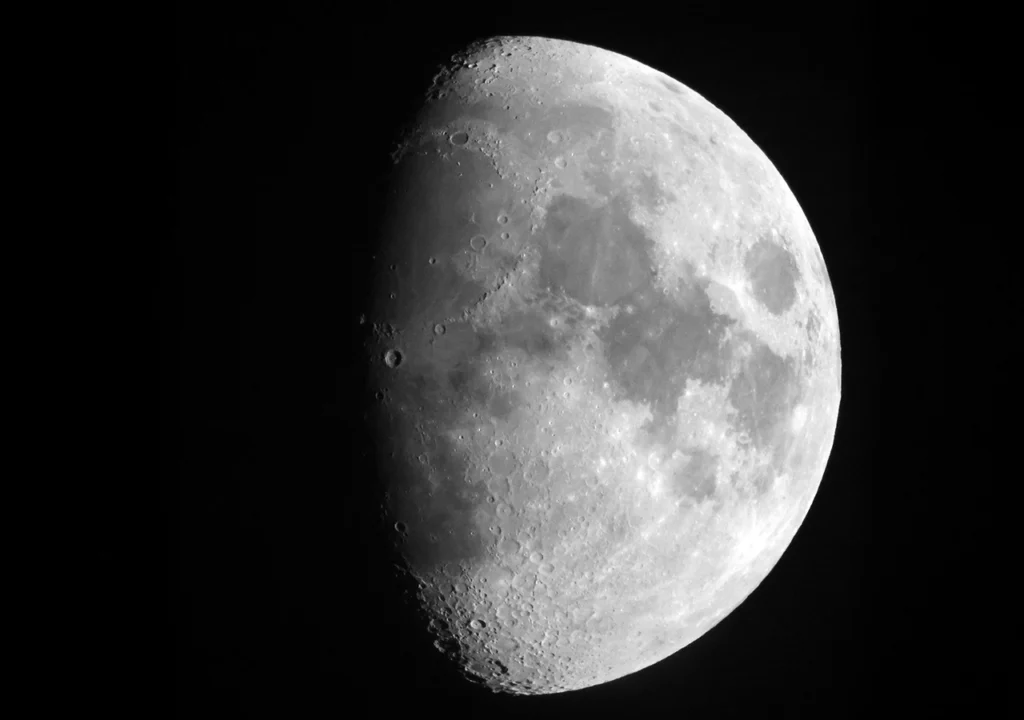
The Moon has been Earth’s constant companion for billions of years. It lights up the night sky, controls ocean tides, and plays a subtle but crucial role in shaping the planet’s stability. Because it has always been part of human experience, it is easy to overlook how deeply the Moon influences Earth’s environment. Imagining Earth without the Moon reveals just how important this natural satellite truly is and how different our planet would look and behave without it.
Without the Moon, Earth would still orbit the Sun, rotate on its axis, and support an atmosphere and oceans. However, many of the systems we take for granted would behave very differently. The absence of the Moon would change the length of days, the strength of tides, the stability of Earth’s climate, and even the development of life itself.
The Moon’s Role in Earth’s Rotation
One of the Moon’s most important influences is its effect on Earth’s rotation. The Moon’s gravity interacts with Earth, creating tidal friction that gradually slows Earth’s spin. This process has been happening for billions of years, lengthening Earth’s day over time.
Without the Moon, Earth would rotate much faster. Days could be as short as six to eight hours instead of the current 24-hour cycle. Faster rotation would lead to stronger winds and more intense weather patterns, as the atmosphere would move more rapidly across the planet’s surface.
Shorter days would also affect biological rhythms. Many plants and animals rely on the current day–night cycle, and a dramatically faster rotation could alter sleep patterns, feeding behaviors, and ecological balance.
Changes in Earth’s Axis and Stability
The Moon plays a critical role in stabilizing Earth’s axial tilt. Earth’s axis is tilted about 23.5 degrees, which is responsible for the changing seasons. The Moon’s gravitational pull helps keep this tilt relatively stable over long periods of time.
Without the Moon, Earth’s tilt could vary much more dramatically. It might wobble between extreme angles, potentially shifting from very small tilts to angles greater than 60 degrees. Such changes would cause severe and unpredictable climate shifts.
In extreme cases, some regions could experience constant sunlight for long periods, while others could be locked in prolonged darkness. Seasonal patterns would become chaotic, making stable climates much harder to maintain.
Seasons Without the Moon
The seasons on Earth are currently predictable and gradual, allowing ecosystems to adapt and thrive. Without the Moon’s stabilizing influence, seasons could become far more extreme and less predictable.
Large swings in axial tilt would result in harsher summers and colder winters. Polar ice could melt rapidly during periods of high tilt and then refreeze during low-tilt phases. These rapid changes would place immense stress on ecosystems and could lead to widespread extinctions.
The moderate seasonal cycles that support agriculture and complex life might never have developed in a Moonless world.
Weaker Ocean Tides
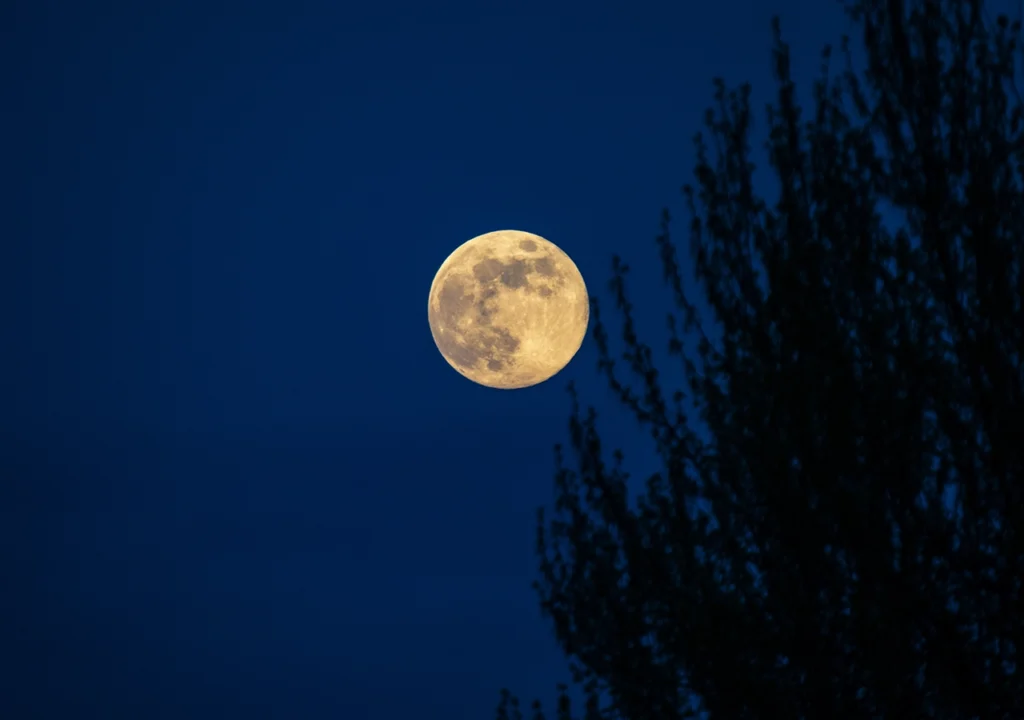
One of the most visible effects of the Moon is the rise and fall of ocean tides. The Moon’s gravity pulls on Earth’s oceans, creating tidal bulges that move as Earth rotates. While the Sun also influences tides, the Moon is the dominant factor.
Without the Moon, tides would be much weaker, driven primarily by the Sun. These solar tides would be only about one-third as strong as current tides. Coastal environments would change dramatically, and tidal zones that support diverse ecosystems would be far less pronounced.
Tides play an important role in mixing ocean waters, distributing nutrients, and supporting marine life. Weaker tides could lead to reduced ocean circulation and affect the health of marine ecosystems.
Impact on Marine Life
Many marine species depend on tides for survival. Tidal pools, for example, provide unique habitats that support a wide range of organisms. Without strong tides, these environments would be greatly reduced or disappear entirely.
Some marine animals also rely on tidal cycles for reproduction, migration, and feeding. Weaker tides could disrupt these life cycles, leading to reduced biodiversity in coastal regions.
Over long periods, marine ecosystems would likely adapt, but the absence of strong tides would result in oceans that function very differently from those we know today.
Effects on Earth’s Climate
The Moon indirectly affects Earth’s climate by stabilizing the planet’s rotation and axial tilt. Without this stabilization, climate patterns would become more erratic and extreme.
Rapid changes in tilt could trigger ice ages or intense warming periods more frequently. Atmospheric circulation patterns would also shift as faster rotation and altered temperature gradients influence wind systems.
The overall result would be a less predictable climate, making long-term environmental stability more difficult to achieve.
Longer-Term Geological Effects
The Moon has influenced Earth’s geology since its formation. Tidal forces generate small but continuous stresses within Earth’s crust, contributing to geological activity over long timescales.
Without the Moon, some of these tidal stresses would be reduced. While this would not stop plate tectonics, it could slightly alter patterns of volcanic and seismic activity. The long-term evolution of Earth’s surface might follow a different path.
Additionally, the Moon acts as a witness to Earth’s early history. Without it, our understanding of the planet’s formation would be far more limited.
The Night Sky Without the Moon
Visually, one of the most obvious changes would be the appearance of the night sky. Without the Moon, nights would be significantly darker. The Milky Way and distant stars would appear brighter and more detailed without moonlight washing them out.
While darker skies might benefit stargazing, the absence of moonlight would affect nocturnal animals that rely on it for navigation, hunting, or avoiding predators. Many species have evolved behaviors tied to the lunar cycle.
Human culture, navigation, and timekeeping have also been deeply influenced by the Moon. Without it, calendars, myths, and early navigation methods would have developed very differently.
Slower Evolution of Life
Some scientists believe the Moon played a role in the early development of life on Earth. Strong tides may have helped mix chemical ingredients in shallow coastal environments, supporting the formation of complex organic molecules.
The stabilization of Earth’s climate by the Moon may have provided the long periods of environmental consistency needed for complex life to evolve. Without the Moon, Earth’s climate might have been too chaotic for advanced life forms to develop easily.
While life might still exist on a Moonless Earth, it could be simpler, less diverse, or follow a very different evolutionary path.
Earth’s Appearance from Space
From space, Earth without the Moon would appear lonely, lacking its familiar companion. The dynamic Earth–Moon system would be replaced by a solitary planet orbiting the Sun.
The absence of the Moon would also slightly affect Earth’s orbit and gravitational interactions with other bodies, although these changes would be subtle. Still, the overall architecture of the solar system would feel different without one of its most prominent features.
Could Humans Exist Without the Moon?
Whether humans could exist on a Moonless Earth is an open question. While life might still arise, the extreme climate variability and faster rotation could make the development of complex civilizations more difficult.
Agriculture relies on predictable seasons and stable climates. Without the Moon’s stabilizing effects, sustaining long-term food production would be far more challenging.
Human culture has also been shaped by the Moon in countless ways, from timekeeping to art and mythology. A Moonless Earth would have led to a very different human story, if humans evolved at all.
To conclude, we can say that earth without the Moon would be a dramatically different world. Faster rotation, unstable axial tilt, weaker tides, and extreme climate variations would reshape the planet’s environment and influence the development of life.
The Moon is far more than a passive object in the sky. It plays an active role in maintaining the balance that makes Earth a stable and life-friendly planet. By imagining Earth without the Moon, we gain a deeper appreciation for the delicate cosmic relationships that shape our world and make it the unique place we call home.
References
https://science.nasa.gov/moon/overview/
https://solarsystem.nasa.gov/moons/earths-moon/overview/
https://www.space.com/earth-without-moon-effects
https://astronomy.swin.edu.au/cosmos/M/Moon
https://www.livescience.com/earth-without-the-moon