The question of what is the brightest object in the universe forces astronomers to think carefully about how brightness is defined and measured across enormous distances. In everyday life, brightness is judged by appearance, but in astronomy appearance can be misleading. Objects that look faint may release enormous amounts of energy, while objects that appear bright may simply be close to Earth. To make meaningful comparisons, astronomers rely on measurable quantities such as energy output, distance, wavelength, and duration. By combining observations with physical laws, scientists are able to identify which cosmic objects truly dominate the universe in terms of energy production.
Understanding Brightness in Astronomy
Brightness is one of the most fundamental concepts in astronomy, yet it requires precise definitions to avoid confusion. Astronomers separate brightness into two main categories so that objects across the universe can be compared accurately.
Apparent Brightness
Apparent brightness describes how bright an object appears from Earth. It depends strongly on distance, because light spreads out as it travels through space. A nearby star with modest energy output can appear brighter than a distant galaxy that produces vastly more energy. Apparent brightness is also affected by interstellar dust and gas, which can absorb or scatter light before it reaches a telescope. Because of these effects, apparent brightness alone cannot be used to determine how powerful an object truly is.
Intrinsic Brightness
Intrinsic brightness, also called luminosity, measures how much energy an object emits per second. This quantity does not depend on distance. By measuring how far away an object is and correcting for absorption, astronomers can calculate luminosity and compare objects on equal terms. When scientists ask what the brightest object in the universe is, they are almost always referring to intrinsic brightness rather than appearance.
Measuring Extreme Brightness Across Space
Determining brightness across billions of light-years requires advanced instruments and multiple independent measurements.
Observations Across the Electromagnetic Spectrum
Different physical processes produce light at different wavelengths. Radio telescopes detect jets and energetic particles, infrared telescopes trace heat and dust, optical telescopes study stars and galaxies, ultraviolet telescopes reveal hot gas, and X-ray and gamma-ray observatories detect the most energetic phenomena in the universe. Combining data across the electromagnetic spectrum allows astronomers to measure total energy output rather than relying on a single band of light.
Time Variability and Emission Size
Changes in brightness over time provide important clues about an object’s size and structure. Rapid variations indicate compact sources, because light cannot change faster than it can travel across the emitting region. Slower variations suggest larger regions. This method is especially useful for identifying extremely bright objects powered by compact engines such as black holes.
Motion, Mass, and Gravity
Doppler shifts reveal how fast material is moving, while orbital motion reveals mass. Gravitational lensing can magnify distant objects, allowing astronomers to study extremely bright sources that would otherwise be too faint to observe. Together, these measurements help determine whether brightness comes from nuclear fusion, gravitational accretion, or explosive processes.
The Brightest Sustained Objects Known
When brightness is considered over long periods rather than brief flashes, one class of objects stands above all others.
Quasars
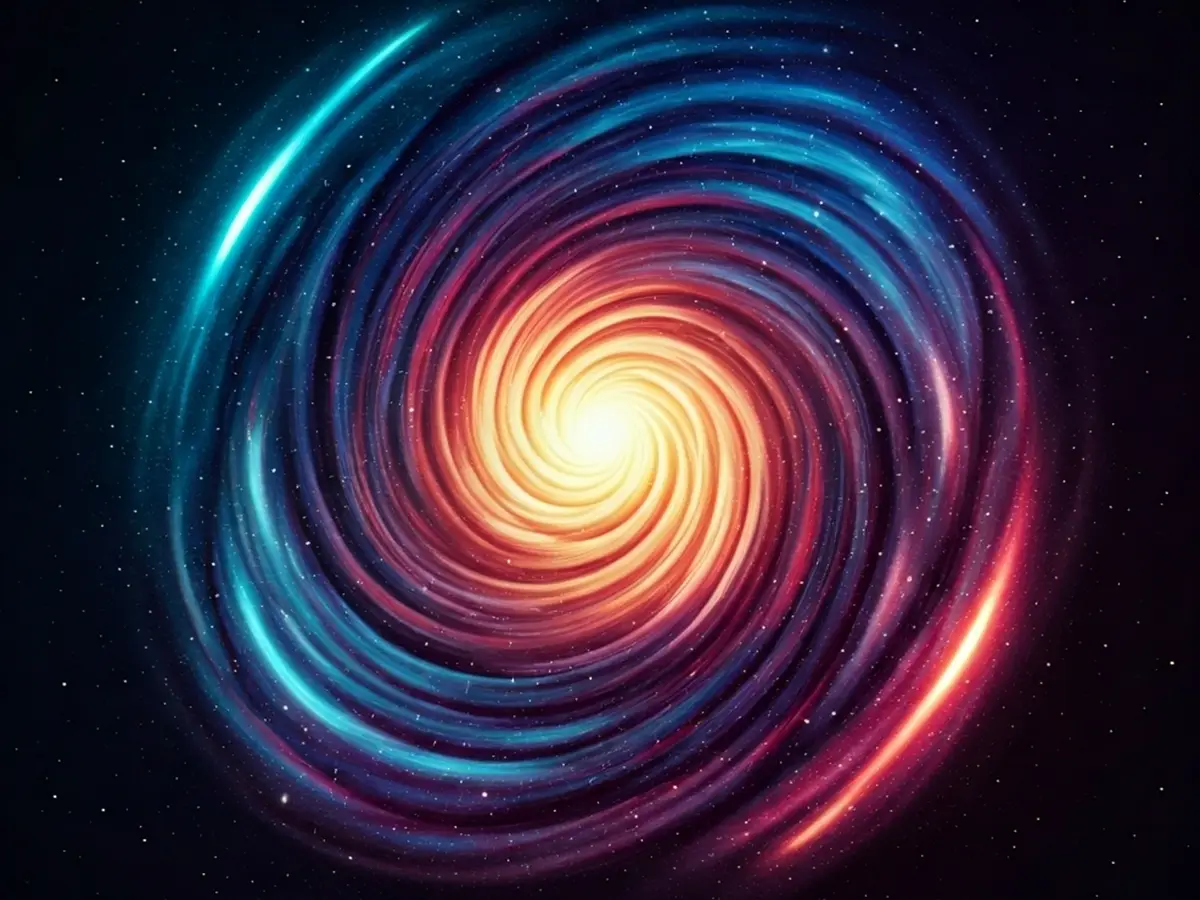
Quasars are the brightest sustained objects in the universe. They are powered by supermassive black holes located at the centers of galaxies that are actively accreting matter. As gas and dust spiral inward, gravitational energy is converted into radiation with extraordinary efficiency. A single quasar can emit more energy than an entire galaxy composed of hundreds of billions of stars. Quasars can remain luminous for millions of years, making them the dominant continuous energy sources known.
Active Galactic Nuclei
Quasars belong to a broader category known as active galactic nuclei. These objects share the same power source but differ in orientation, structure, and brightness. Some appear less luminous because their central regions are partially obscured, yet their intrinsic energy output can still rival that of quasars.
The Brightest Explosive Phenomena
Some cosmic events do not remain bright for long but release extraordinary energy over short timescales.
Gamma-Ray Bursts
Gamma-ray bursts are the brightest explosions ever observed. In seconds, they can release more energy than the Sun will emit over its entire lifetime. These bursts are believed to originate from the collapse of massive stars or from mergers involving neutron stars. Although brief, their peak brightness exceeds that of any sustained object.
Supernova Explosions
Supernovae mark the violent deaths of stars. During a supernova, a star can briefly outshine its entire host galaxy. While less energetic than gamma-ray bursts, supernovae remain bright for weeks or months, making them some of the most dramatic astronomical events.
Bright Stars and Physical Limits
Stars vary widely in brightness depending on mass, temperature, and stage of evolution.
Massive and Luminous Stars
Some stars, such as luminous blue variables and blue supergiants, are among the brightest individual stars known. Their brightness is powered by nuclear fusion in their cores. Despite their intensity, even the brightest stars cannot match the energy output of quasars.
Limits on Stellar Brightness
There are physical limits to how bright a star can become. If radiation pressure becomes too strong, it can push material away from the star, limiting further growth. These limits explain why stars do not dominate the universe in intrinsic brightness.
What Observations Show Today
Decades of observation across multiple wavelengths strongly support the conclusion that quasars are the brightest sustained objects in the universe. Their luminosity arises from efficient conversion of gravitational energy into radiation. Explosive events such as gamma-ray bursts hold the record for peak brightness, while stars dominate brightness on local scales within galaxies.
Remaining Questions
Although astronomers have identified the brightest classes of objects, questions remain about how early quasars grew so massive so quickly after the Big Bang and how their brightness changes over cosmic time. Improved telescopes, longer surveys, and more detailed simulations will continue to refine these answers.
The brightest object in the universe depends on how brightness is defined and measured. When sustained energy output is considered, quasars clearly dominate. When peak intensity over short timescales is examined, gamma-ray bursts take the lead. By applying consistent measurements and physical laws, astronomers continue to sharpen our understanding of the universe’s most extreme sources of light.
References
https://science.nasa.gov/universe/black-holes/quasars/
https://imagine.gsfc.nasa.gov/science/objects/quasars1.html
https://www.esa.int/Science_Exploration/Space_Science/What_is_a_quasar
https://www.nasa.gov/universe/gamma-ray-bursts/—