What Is 3I ATLAS and Why It Matters
The discovery of interstellar objects passing through our solar system has opened a new chapter in modern astronomy. Among these rare visitors, 3I ATLAS stands out as a mysterious object that originated far beyond the influence of our Sun. Unlike ordinary comets that formed within the solar system, 3I ATLAS was born around a completely different star, making it a unique messenger from another planetary system. Its journey through our cosmic neighbourhood provided scientists with a rare opportunity to study material that did not originate from our own solar system.
Interstellar objects are extremely difficult to detect due to their speed and unpredictable paths. The identification of 3I ATLAS highlights how advances in sky-survey technology and automated detection systems are improving humanity’s ability to observe fleeting cosmic events. Each such discovery helps astronomers refine their understanding of how planetary systems form and evolve throughout the galaxy.
The Discovery of 3I ATLAS
3I ATLAS was detected by advanced sky-survey telescopes designed to monitor near-Earth objects and transient celestial events. These systems constantly scan the sky, comparing images taken at different times to identify objects that move against the background of distant stars. When 3I ATLAS was first observed, its unusual trajectory immediately drew attention.
Astronomers quickly determined that the object was travelling on a hyperbolic path, meaning it was not gravitationally bound to the Sun. This trajectory confirmed that 3I ATLAS originated outside our solar system. Its discovery marked only the third time an interstellar object had been identified passing through our cosmic neighbourhood, underscoring how rare such events truly are.
A Visitor From Another Star System
What makes 3I ATLAS especially fascinating is its origin. Most comets and asteroids formed from the same protoplanetary disk that gave rise to the Sun and planets. In contrast, 3I ATLAS formed around an entirely different star, possibly billions of years ago, before being ejected into interstellar space by gravitational interactions within its original system.
As it travelled through the vast emptiness between stars, 3I ATLAS remained largely unchanged, preserving chemical signatures from its place of birth. This makes interstellar objects valuable time capsules that allow scientists to compare the composition of distant planetary systems with our own.
Closest Approach to Earth
The mysterious interstellar visitor 3I ATLAS made its closest approach to Earth on December 19, 2025, capturing the attention of astronomers and space enthusiasts around the world. During this period, countless curious eyes turned toward the sky as professional observatories and amateur astronomers alike used telescopes from Earth to observe the object.
Although 3I ATLAS posed no threat to our planet, its proximity provided a rare observational window. This close approach allowed scientists to collect detailed data on its brightness, motion, and physical characteristics, offering insights that would not have been possible at greater distances.
Why 3I ATLAS Appeared Green
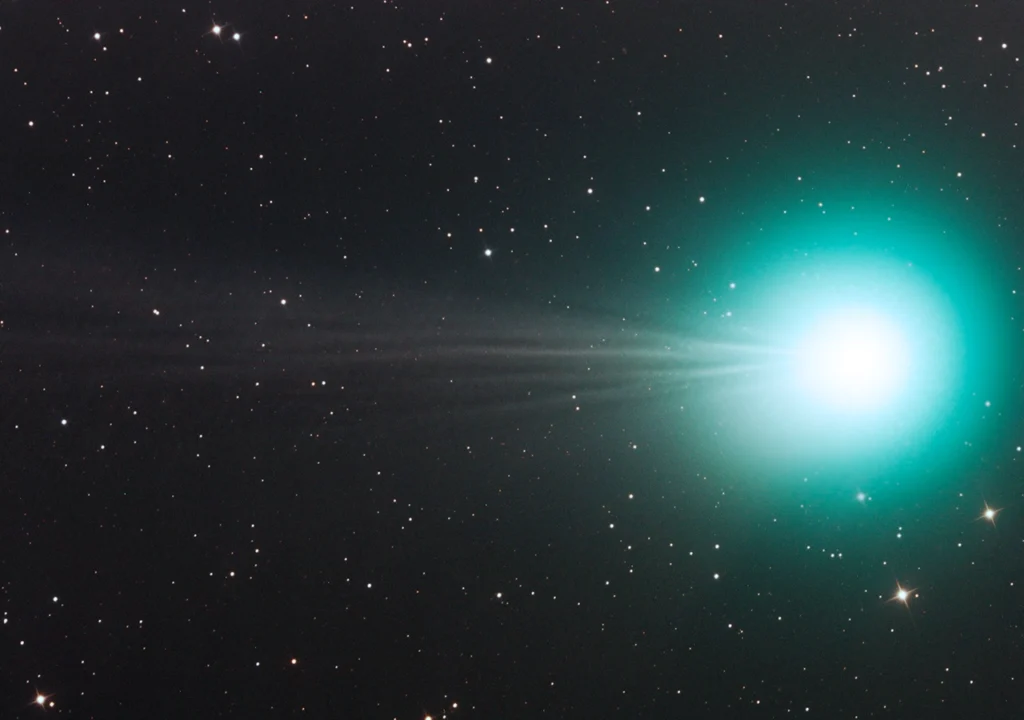
One of the most striking features of 3I ATLAS was its eerie green glow. As the object approached the inner solar system, it warmed under the influence of the Sun’s radiation. This heating caused volatile materials trapped within the object to sublimate, releasing gases into space.
Among these gases were carbon-based compounds that glow green when exposed to sunlight. This phenomenon is also observed in some solar-system comets, but seeing it in an interstellar object provided confirmation that similar chemical processes occur in distant star systems.
Observations From Earth-Based Telescopes
Ground-based telescopes played a crucial role in studying 3I ATLAS. Using advanced imaging techniques and spectroscopy, astronomers analysed the light reflected and emitted by the object. These observations provided valuable insights into its composition, size, and structure.
Even amateur astronomers contributed to the global effort, capturing images and measurements that complemented professional observations. This collaborative approach demonstrated how modern astronomy benefits from both large observatories and citizen scientists.
What 3I ATLAS Reveals About Alien Chemistry
Because 3I ATLAS formed outside our solar system, its composition offers clues about the chemistry of another stellar environment. By studying the gases released as it warmed, scientists were able to identify compounds that may be common in other planetary systems.
These findings help researchers compare the building blocks of distant systems with those found closer to home, improving models of planet formation across the galaxy.

A Brief Guest With a One-Way Path
Unlike planets or long-period comets that periodically return, 3I ATLAS followed a one-way trajectory through the solar system. After its closest approach, it continued on a path that will eventually carry it back into interstellar space.
This fleeting visit emphasises the importance of rapid detection and observation, as scientists had only a limited time to gather data before the object began its long departure.
Why We May Never See 3I ATLAS Again
The hyperbolic orbit of 3I ATLAS ensures that it will not return. Once it escapes the gravitational pull of the Sun, it will continue its journey through the galaxy, possibly never coming close to another planetary system.
Future interstellar visitors may be discovered, but each one will be unique, making every encounter scientifically valuable.
How Interstellar Objects Change Astronomy
The detection of 3I ATLAS reinforces the idea that interstellar space is not empty but filled with objects wandering between stars. These travellers may be fragments of distant planetary systems, ejected during periods of instability.
As detection technology improves, astronomers expect to find more interstellar objects in the coming decades.
The Future of Interstellar Object Research
The brief visit of 3I ATLAS has already influenced future research strategies. Astronomers are developing faster detection systems and planning missions that could one day intercept interstellar objects.
Such missions could allow direct sampling of material from another star system, transforming planetary science.
A Rare Cosmic Messenger
3I ATLAS serves as a rare cosmic messenger, carrying information from a distant star system to our own. Its journey through the solar system offered a brief but invaluable opportunity to study alien material without leaving Earth.
While we may never see 3I ATLAS again, its legacy will remain as a reminder of how dynamic and interconnected our galaxy truly is.
References
NASA – Interstellar Objects Overview: https://science.nasa.gov/solar-system/comets/interstellar-objects/
Wikimedia Commons – 3I ATLAS Hubble Observation: https://commons.wikimedia.org/wiki/File:3I-ATLAS_Hubble_2025-07-21_tracked_crop.gif
The Sky Live – 3I ATLAS Information Page: https://theskylive.com/c2025n1-info
ESA – Comets and Interstellar Visitors: https://www.esa.int/Science_Exploration/Space_Science/Comets