The universe never ceases to amaze us. For decades, astronomers have searched the skies for planets beyond our solar system — worlds that might resemble Earth. The latest and perhaps most surprising finding is the discovery of Earth-sized planets in a binary star system.
Binary star systems, where two stars orbit around a common center of mass, were long believed to be too chaotic to host stable, rocky planets. But recent observations have shattered this belief, revealing that even twin suns can nurture small, Earth-like worlds. This discovery not only broadens our understanding of how planets form but also reshapes the quest for habitable planets in our galaxy.
The Discovery That Redefined Planet Formation
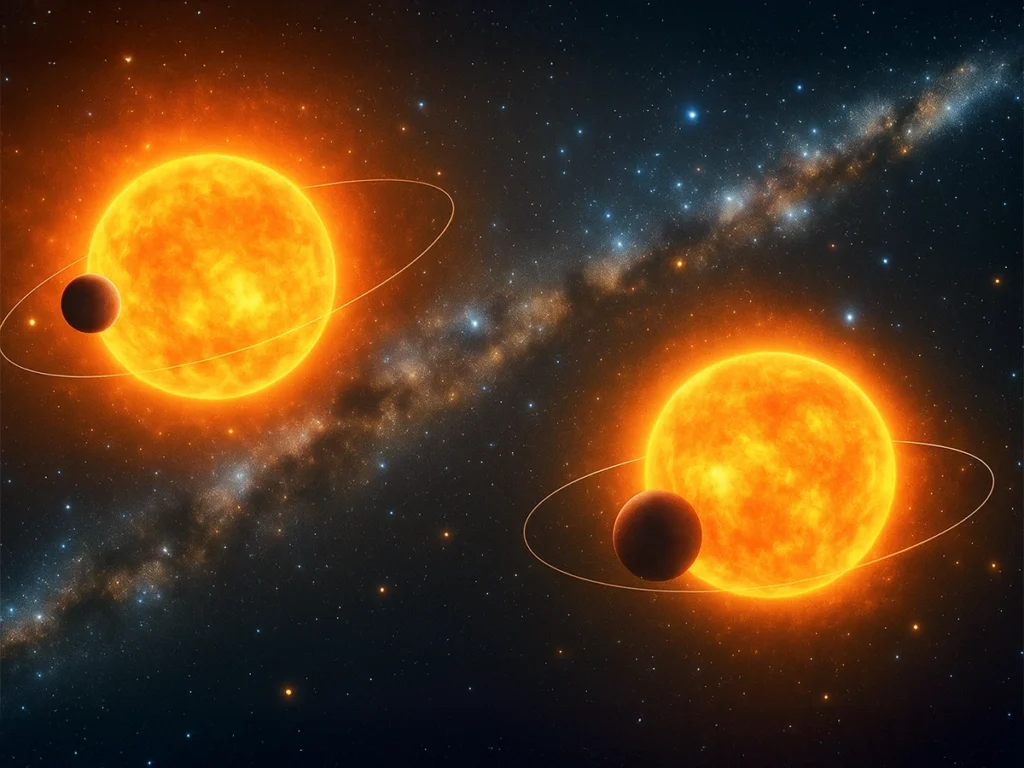
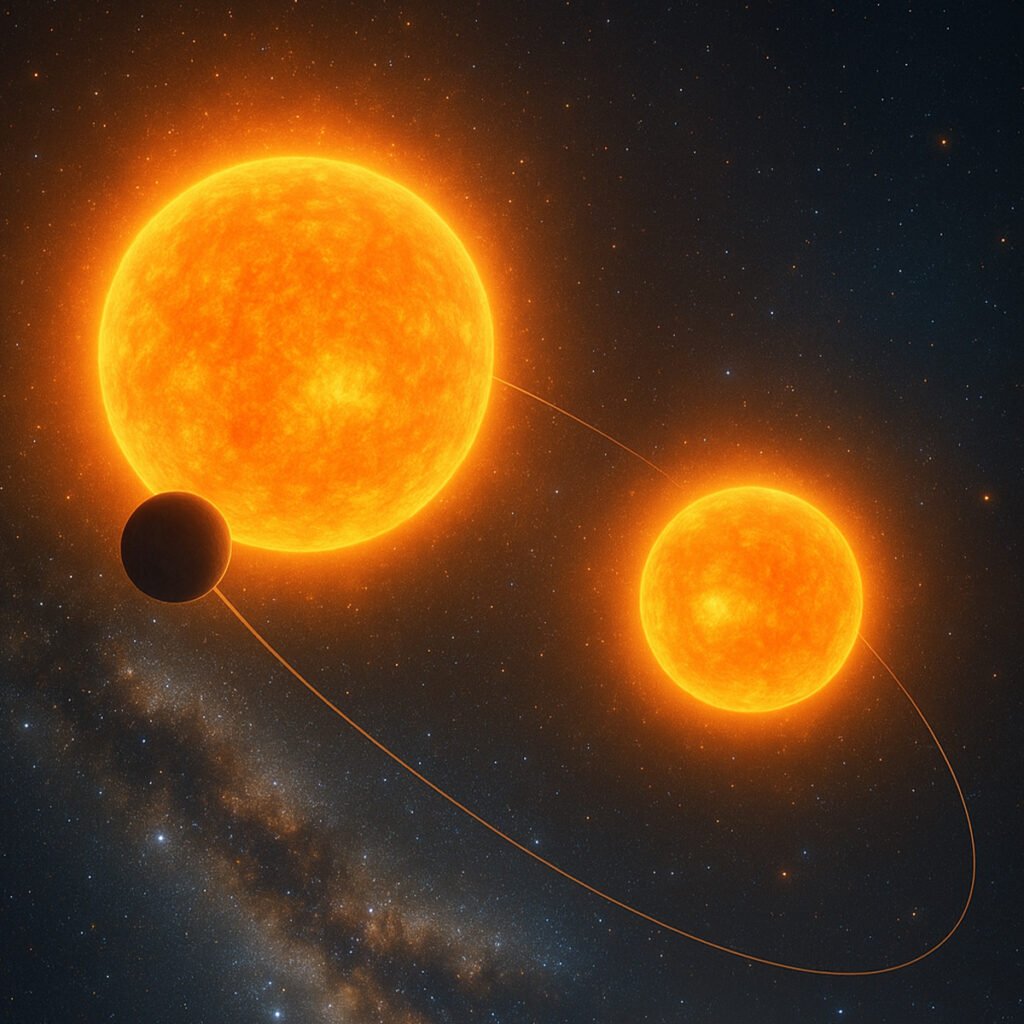
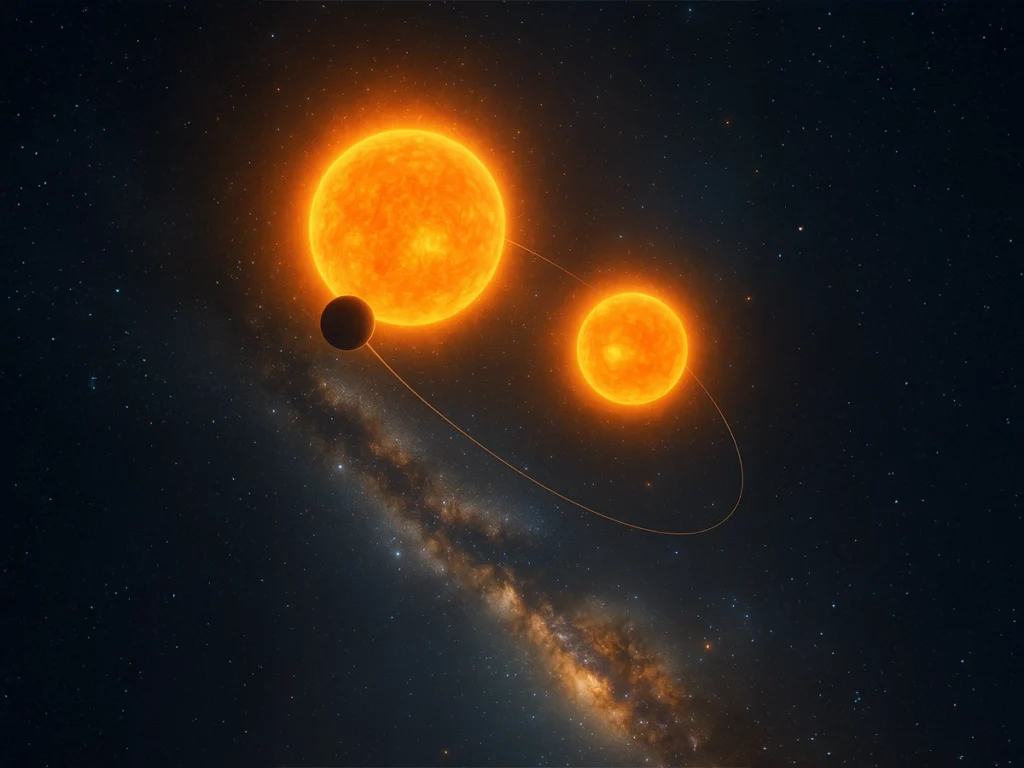
Astronomers recently detected three Earth-sized exoplanets in a binary system known as TOI-2267, located roughly 190 light-years from Earth. What makes this finding remarkable is that two of these planets orbit one star of the pair, while the third circles the companion star.
This means that both stars in the binary system host their own transiting planets — a first in astronomical history. The planets are relatively small and orbit their stars closely, completing one revolution in just a few days. Despite their proximity to their suns, their very existence challenges what scientists thought they knew about planetary formation and stability.
Why Binary Star Systems Were Once Dismissed
In traditional planet formation theories, binary systems were seen as unstable environments. The gravitational pull between two stars can disturb the protoplanetary disk — the swirling cloud of dust and gas from which planets form.
This turbulence was believed to make it nearly impossible for solid material to stick together long enough to form planets. Instead of gentle collisions that build planets, materials might smash apart before growing large enough to become worlds.
Moreover, even if planets somehow formed, maintaining stable orbits in such a system seemed unlikely. A small gravitational nudge from one of the stars could easily send a planet spiraling out of orbit or crashing into its host star.
That’s why the discovery of small, rocky planets in TOI-2267 is so groundbreaking — it shows that nature can find stability even in places we once thought were too volatile.
How Do Planets Form in Binary Systems?
Planet formation begins in a disk of gas and dust around a young star. Over time, particles collide, stick together, and grow into planetesimals — the building blocks of planets. In a binary system, however, this process is much more complex.
- Disk Stability: The gravity of the second star can distort or truncate the disk, limiting how far material can spread.
- High-Speed Collisions: Objects in the disk may move faster and collide more violently, breaking apart rather than merging.
- Orbital Stability: Once formed, a planet must maintain an orbit that isn’t disrupted by the gravitational tug of the companion star.
Despite these challenges, the TOI-2267 system proves that small planets can indeed survive in these environments. Their orbits are surprisingly stable — likely due to the tight configuration of the two stars and the specific angles of their orbits.
Why This Discovery Matters
The existence of Earth-sized planets in a binary star system is more than a scientific curiosity — it’s a paradigm shift. Roughly half of all stars in the Milky Way belong to binary or multiple-star systems. If rocky planets can form and survive in these systems, the number of potentially habitable worlds in our galaxy might be far greater than previously estimated.
It also means that many of the systems once ignored by planet hunters may actually be prime targets for exploration. In other words, we’ve been overlooking half the potential real estate for life in the cosmos.
Two Suns, One Sky — The Climate Question
One of the most fascinating aspects of life in a binary system is the climate dynamics. Imagine living on a planet with two suns — the sky would look dramatically different from ours. Depending on their orbits, one star might rise while the other sets, casting unique patterns of light and temperature.
However, the dual-star environment can also make conditions extreme. The combined radiation could make a planet too hot, while varying distances between the stars and planet might lead to unpredictable climate changes.
The recently discovered planets orbit quite close to their stars, meaning they’re probably too hot to support liquid water or life as we know it. Still, their existence tells us that more distant — and potentially habitable — Earth-sized planets could also form in similar systems.
Expanding the Definition of Habitability
Until now, scientists mainly focused on single-star systems like our own when searching for habitable zones. But binary systems offer a new and exciting dimension.
In theory, if a binary system’s stars are close enough together, a planet could orbit both in a stable “circumbinary” orbit. If such a planet lies at the right distance, it could enjoy a consistent climate and potentially support life.
Alternatively, if the two stars are far apart, each could have its own “mini solar system” of planets — as seen in TOI-2267 — and one of these could fall within the habitable zone.
This discovery opens a new chapter in astrobiology: the study of life in systems illuminated by twin suns.
Implications for Future Space Missions
Space agencies are already taking note of these discoveries. The James Webb Space Telescope (JWST) and future missions like the Nancy Grace Roman Space Telescope could help study the atmospheres of these Earth-sized planets in detail.
By analysing how starlight filters through their atmospheres during transits, scientists can detect gases like oxygen, methane, and carbon dioxide — key indicators of potential biological activity.
Moreover, improved detection methods and larger telescopes will allow researchers to find smaller and more distant planets in binary systems, including those within the habitable zone.
A Universe of Possibilities
This finding underscores an important truth about the universe: life — and the conditions that support it — may be far more adaptable than we think.
For centuries, humanity believed Earth was unique. Then we discovered thousands of exoplanets, some surprisingly similar to our own. Now, with Earth-sized planets found in a binary system, the boundary of what’s “possible” has expanded once again.
From a cosmic perspective, this discovery reminds us that the universe is not just stranger than we imagine — it’s stranger than we can imagine.
Conclusion
The discovery of Earth-sized planets in a binary star system challenges long-held theories of planet formation and stability. It demonstrates that rocky planets can emerge and endure even in environments shaped by two suns.
This breakthrough not only expands our understanding of the universe but also inspires a new phase in the search for habitable worlds. If such planets can thrive amid the gravitational dance of twin stars, then our galaxy may be filled with countless Earth-like worlds waiting to be found — and perhaps, some waiting to be visited.
References:
- Zúñiga-Fernández et al., Two warm exoplanets orbiting the cool binary system TOI-2267, Astronomy & Astrophysics (2025)
- Anderson, N., Astronomers Find Three Earth-Sized Exoplanets in a Compact Binary System, Sci.News (2025)
- Whalen, R., Unexpected Earth-Sized Exoplanets Discovered in Binary Star System – Test the Limits of Planet Formation Models, The Debrief (2025)
- Barbosa, G.O. et al., Earth-size Planet Formation in the Habitable Zone of Circumbinary Stars, arXiv:2003.11682