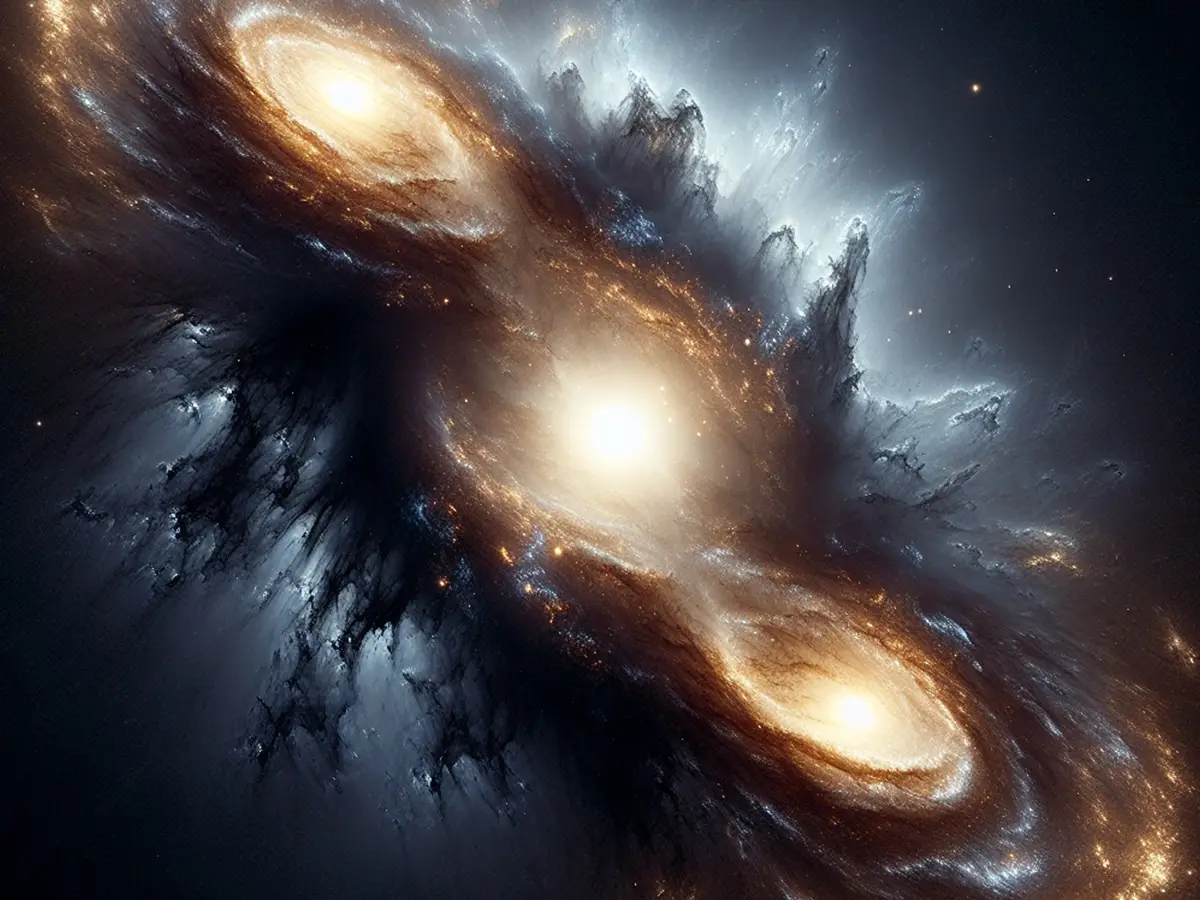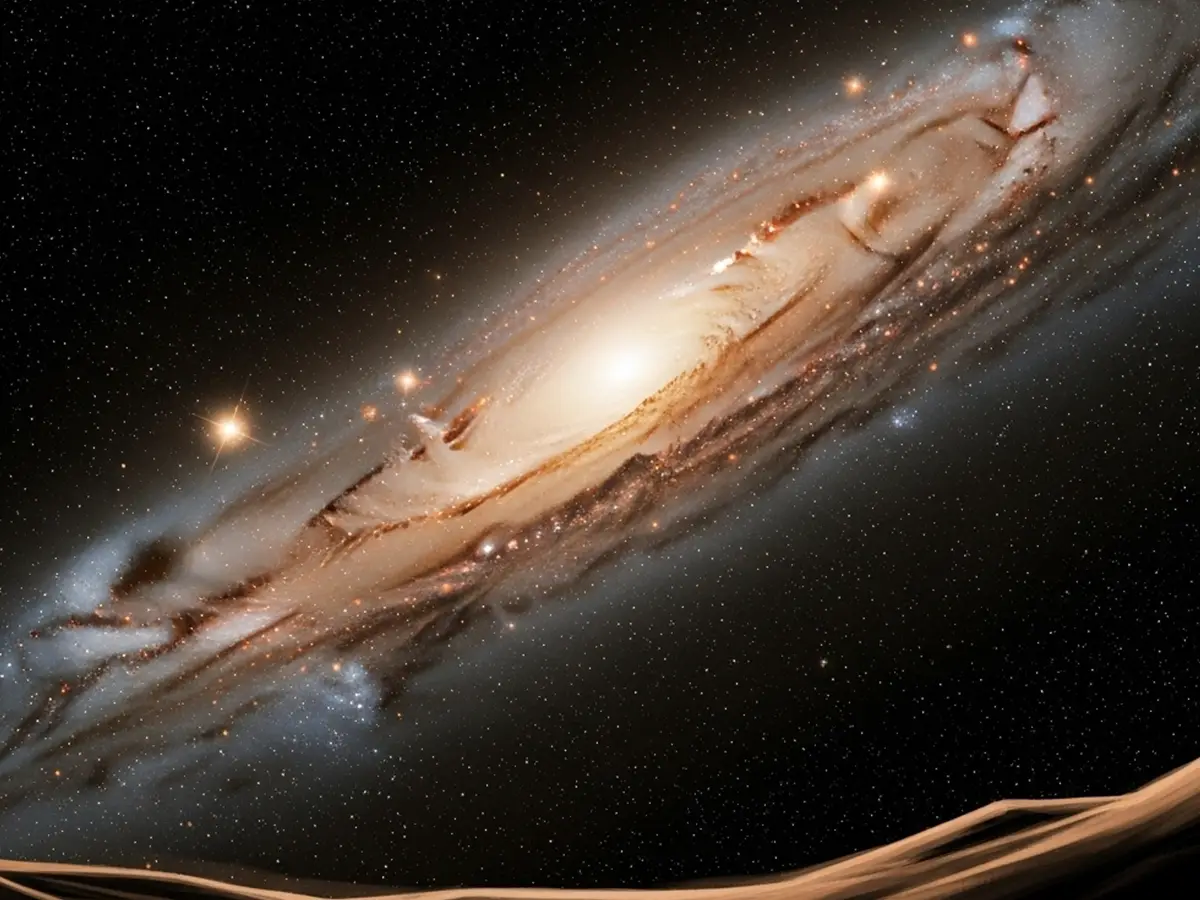

Can a Planet Have Two Suns? Understanding Binary Star Systems is one of those space questions that feels simple at first, but becomes deeper the more you look. Astronomers often rely on indirect clues—light, motion, timing, and gravitational effects—to understand things that are far away, faint, or hidden. This article explains the topic in a clear, WordPress-ready way while keeping the science grounded.
The Core Idea in Simple Terms
Many space mysteries come down to a few fundamentals: gravity shapes motion, radiation carries information, and the universe evolves over time. When something seems impossible, it usually means our everyday intuition is not built for cosmic scales or extreme physics.
What We Can Measure Directly
Astronomy begins with observations across the electromagnetic spectrum, from radio waves to gamma rays. Scientists also measure particles and, more recently, gravitational waves. These datasets reveal patterns that point to what is happening physically.
What We Must Infer
Some of the most interesting answers require inference. We cannot touch a distant planet’s core or see inside a black hole. Instead, we combine multiple observations and test models until the explanation fits the evidence best.
How Scientists Investigate This Topic
Telescopes, Spacecraft, and Surveys
Large sky surveys repeatedly scan the sky and catch rare events. Spacecraft provide close-up measurements in our solar system. Together, these tools create a picture that no single instrument could provide.
Spectra, Timing, and Motion
Spectra reveal temperature and composition. Timing reveals cycles and sudden bursts. Motion reveals mass through gravity. When these three agree, confidence increases.
Simulations and Modeling
Because we cannot perform full-scale experiments on cosmic objects, simulations help test ideas. A strong model must explain what we already see and predict what we should see next.
What We Know Today
Reliable Findings
Even for debated topics, many pieces are well established: how gravity behaves in many regimes, how light travels and gets bent, and how matter behaves under common astrophysical conditions.
Where the Uncertainty Lives
Uncertainty often comes from limited data, rare events, or extreme environments. Sometimes it comes from the need for new physics—places where current equations are stretched to their limits.
Common Misconceptions
Viral Myths vs Reality
Online explanations often exaggerate certainty or focus on the most dramatic angle. Real science is careful: results must be repeatable and consistent across instruments and teams.
Mystery Does Not Mean Magic
A topic can be mysterious while still being scientific. ‘Unknown’ simply marks the edge of current evidence and the next target for better observations.
Why This Matters
Big Picture Impact
Understanding this subject improves our broader models of how the universe works—from the behavior of matter and energy to the formation of structure over time.
Human Relevance
Even if the topic seems far away, the methods developed to study it often lead to better sensors, imaging, computation, and new technologies.
What to Watch Next
Better Data Is the Key
The next leaps usually come from better instruments and longer observing time. As datasets grow, mysteries become clearer—or split into multiple phenomena that were previously lumped together.
The Questions That Stay Open
Some questions remain open because the universe is huge and slow. Others remain open because they touch on fundamental physics. Either way, that’s why these topics stay fascinating.
Conclusion
Can a Planet Have Two Suns? Understanding Binary Star Systems remains popular because it connects real measurements to big unanswered questions. With each new mission and discovery, the explanation becomes sharper, and the universe becomes even more interesting.
Scientific Insight
A useful way to think about can a planet have two suns? understanding binary star systems is to separate what is measured from what is inferred. Measurements come with uncertainty, and good explanations account for that uncertainty instead of ignoring it. Over time, repeated observations shrink the uncertainty and make the story clearer.
Why People Search This Topic
People search can a planet have two suns? understanding binary star systems because it sits at the boundary between ‘known’ and ‘unknown.’ It combines real evidence with deep questions about space, time, matter, and the universe’s history—perfect for curiosity-driven learning.
References:
https://science.nasa.gov/
https://www.esa.int/Science_Exploration/Space_Science
https://map.gsfc.nasa.gov/
https://www.space.com/
https://www.cfa.harvard.edu/