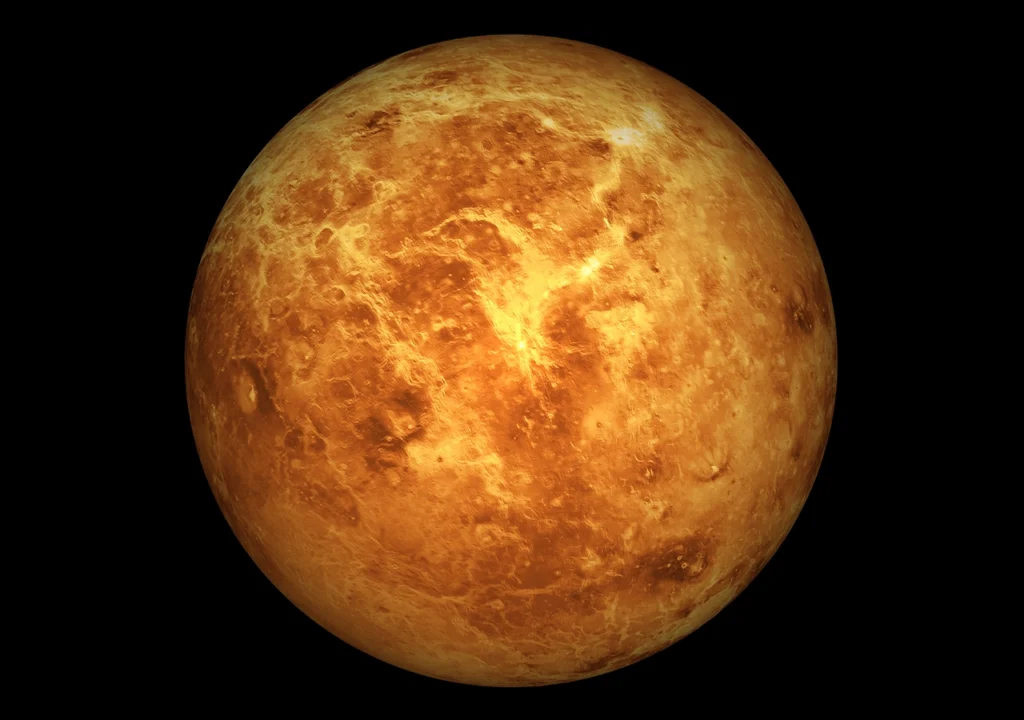
Could Life Exist in the Atmosphere of Venus? is the kind of question that makes space feel both measurable and mysterious at the same time. Astronomers often work with indirect clues—light curves, spectra, motion, and timing—then use physics to rebuild what must be happening in places we cannot visit.
The Core Idea in Simple Terms
To understand could life exist in the atmosphere of venus?, start with the basic ingredients of modern space science: gravity shapes motion, radiation carries information, and time itself can behave differently depending on speed and gravitational fields. When a phenomenon looks impossible, the explanation is usually that our everyday intuition is too small for cosmic scales.
What We Can Measure Directly
Astronomy begins with photons—light from radio to gamma rays—and with particles such as cosmic rays and neutrinos. We also measure gravity indirectly through orbits, gravitational lensing, and gravitational waves. These measurements become the evidence that supports scientific explanations.
What We Must Infer
Many of the most interesting space topics involve regions that are hidden or unreachable: black hole interiors, deep planetary atmospheres, the far side of distant systems, or the earliest moments after the Big Bang. In those cases, scientists infer what is happening using models that must match multiple independent observations at once.
How Scientists Study This Topic
Telescopes and Surveys
Modern surveys repeatedly scan large areas of the sky, collecting huge datasets that reveal patterns over time. Repetition matters because rare events—bursts, collisions, flares, transits—can be missed if you only look once.
Spectra, Timing, and Motion
A spectrum shows how an object emits or absorbs light at different wavelengths, revealing temperature, composition, magnetic fields, and motion. Timing reveals cycles, pulses, and sudden bursts. Motion—measured through Doppler shifts or orbital changes—reveals mass and gravity.
Simulations and Physical Models
Because we cannot run experiments on galaxies or black holes, simulations become a key tool. Scientists test ‘what if’ scenarios and compare simulated predictions to real data. A model is only useful if it explains existing observations and predicts new ones that can be tested.
What We Know Today
The Most Reliable Findings
Even in the most mysterious topics, some parts are well established. Gravity behaves as described by relativity in many tested regimes. Light behaves predictably through space and dust once you account for absorption and scattering. And many cosmic structures follow statistical patterns that emerge from long-term surveys.
The Biggest Uncertainties
Uncertainty usually comes from limited data, extreme conditions, or the need for new physics. Some mysteries are about ‘missing information’—we simply have not observed enough examples. Others are about fundamental theory, where current equations push into domains we cannot test easily in laboratories on Earth.
Common Misconceptions
Viral Explanations vs Scientific Explanations
Online explanations often exaggerate certainty or frame mysteries as solved. Real science usually moves slower: claims must be repeatable, measured with error bars, and consistent across instruments. A single dramatic headline rarely represents the full scientific picture.
‘Unknown’ Does Not Mean ‘Unscientific’
A mystery is not a failure; it is a map of where knowledge is still growing. Science can describe what is observed very precisely while still debating the deeper cause. That is why astronomy remains exciting—because it is built on both measurement and discovery.
What This Could Mean for the Future
New Instruments, Better Answers
As telescopes improve, scientists can measure fainter objects, higher energies, and finer details. Better time coverage also helps catch short events and track long-term changes. Many current mysteries will become clearer with larger datasets and better sensitivity.
Why This Topic Will Stay Popular
Could Life Exist in the Atmosphere of Venus? stays popular because it sits at the boundary between what humans can directly understand and what the universe is actually doing. When you combine big scales, extreme physics, and real observations, you get the perfect recipe for curiosity.
Conclusion
Could Life Exist in the Atmosphere of Venus? is not just an internet mystery; it is a real scientific question connected to how we measure the universe. The more we observe, the more precise our models become. And even when an answer arrives, it usually opens a deeper question—so the story keeps going.
Scientific Insight
One reason could life exist in the atmosphere of venus? is hard to explain is that the universe does not operate on human scales. A tiny change in distance, mass, or energy can produce enormous effects across millions of years. Scientists handle this by using multiple methods at once so that no single measurement carries the entire conclusion.
Why People Search This Topic
People search could life exist in the atmosphere of venus? because it feels like a doorway into the deeper rules of reality. It mixes hard facts—numbers, observations, missions—with big unknowns. That balance makes it ideal for long-form reading and also perfect for short-form videos that tease one surprising idea at a time.
References:
https://science.nasa.gov/
https://www.esa.int/Science_Exploration/Space_Science
https://map.gsfc.nasa.gov/
https://www.space.com/
https://www.cfa.harvard.edu/